

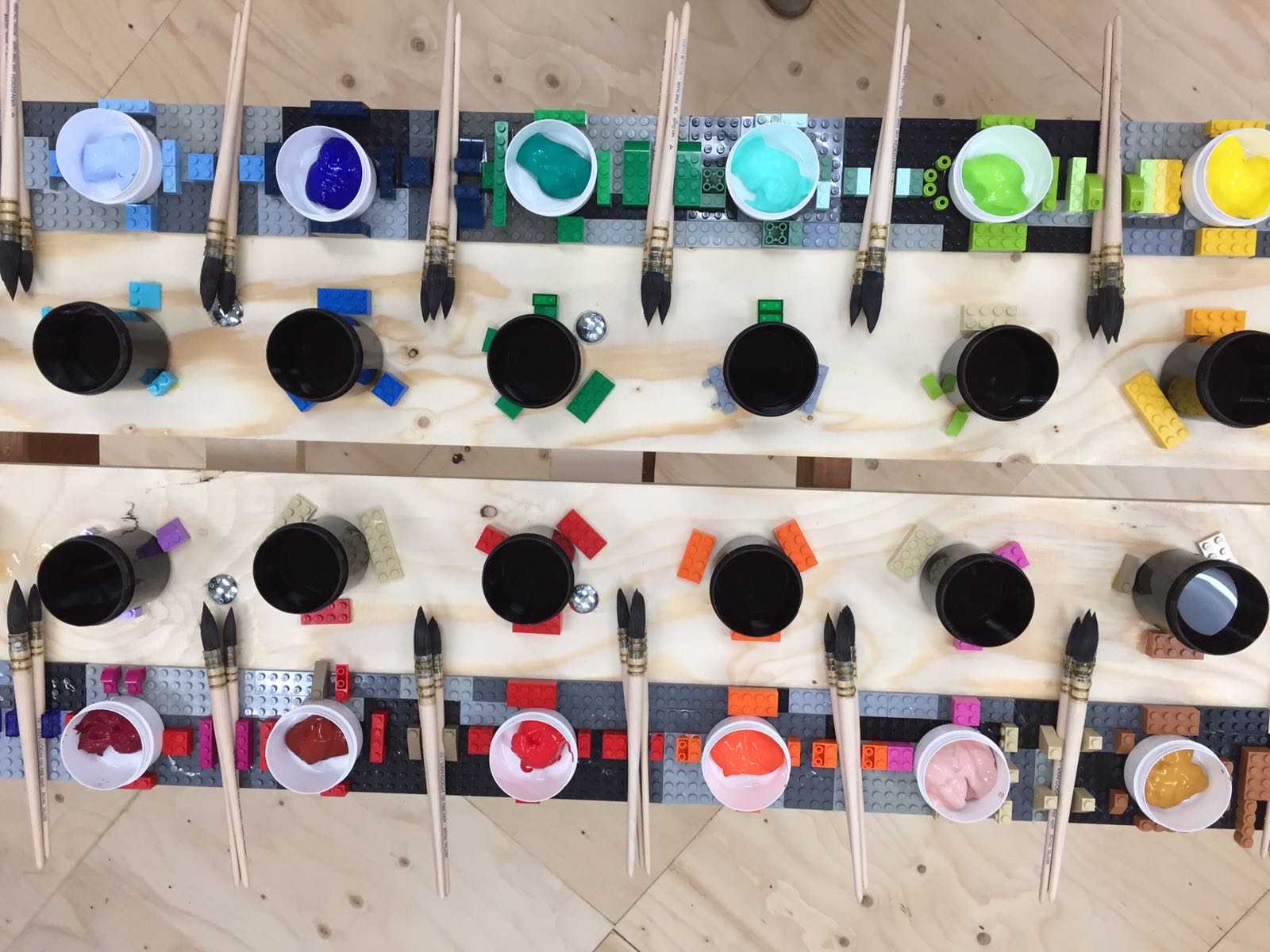
The Painting Game was invented in 1945 by Arno Stern in Paris. At that time, he began to explore this free yet gently guided form of painting together with refugee children. The Painting Game is not about wild splashing of paint; it is a mindful activity in which the painter can devote themselves entirely to their brushstrokes and inner enthusiasm. It is intended just as much for adults as for children, who are invited to leave their traces within a protected space called the Clos-lieu or Malort.
In the Painting Game, needs and enthusiasm can come to life. There are only a few clear rules; otherwise, painters are free to develop their images endlessly. A painting can be expanded over years and across meters of paper.
The Painting Game is not messy or wild—it is structured and free at the same time. However, one never paints for an audience, but only for oneself. Paintings created in the Painting Game never leave the studio. They are not photographed, commented on, or analyzed. The paintings remain a secret.
Painting in the Painting Game means being present in the moment and letting colorful traces emerge. During the session, participants move back and forth between their sheet of paper and the shared paint table. Throughout the entire process, they are assisted by the Painting Game attendant: washing brushes, mixing colors, fetching new sheets, and so on are all taken care of. The participant simply paints—and nothing more.
Yes! The Painting Game is not about “being able” to do something, but about being. It is a form of meditation with a paintbrush.